Showing posts with label discorporate America. Show all posts

19.11.13

Mecha-Da-da is Here. Love U. Go Brush Your Teeth.


That OFF button is so appealing.

Welcome to the (sad) future of parenting. This thing, called "Double" from Double Robotics, allows those with indelicate sensibilities to telecommute with $2500 authority, wandering about the office and into cubicles with impunity, saying, "Howdy!" in real-time with full motion (kinda), as well as audio and video, giving remote office workers that special tax-deductible OOMPH necessary in proving that they do indeed exist at the corporate level, and should keep on getting paid for watching Turner Classic Movies all day... er, working. Sounds cool until someone puts a greasy take-out bag on your virtual head while your virtual officedrones snicker and attach post-its that read, "I suck: Ask me how" and "Kick Me, I'm Really Here," all the while wondering why your hourly rates are so high.

Worse, some too-busy-for-anyone executive type is gonna reverse this usage and deploy it at home so they can be at work forever -- free from what they see as, "guilt" -- shirking their parental duties while feigning sad, "connectedness" with their lonely offspring. Talk about phoning it in. Discorporate America, indeed. If you're that busy, or you think you are (pssst, we know you're not), please don't have kids.

[UPDATE: Double Da-da just rolled into Lake Michigan. Oh well. Da-da's kids are happier, 'cause now they get Real Da-da 1.0, 24/7/365.25. Quid Erat Parentstratum.]

Mark Da-da's words: mocking robots will be the hot new trend for the next bazillion years, until they take over.

"Da-da is so pleased to be here this morning... is this thing on?"

12.9.13

Have You Seen the Muffin Man?


                                                                                           [img courtesy of Tom Gilroy by way of superpunch]

19.10.10

Bright Tykes, Big City


I kept my young charges, Bronko and Nagurski, out of school today to size them up at the first annual Youth Work Force Draft, held at Moscone Center in San Francisco, CA. Expected to become an annual event, the forum is the brainchild of Dr. Sheldon Tyrel (brother of The Rand's principal), a professor emeritus from The University of Morvalia who’s now a human resources consultant. His goal: to match elementary and junior high school students with corporations eager to install them into cubicles as soon as possible.

Representatives from the federal government, VC firms and several big-name tech companies were in attendance, hoping to quietly cash in on the next wave of intellectual capital. Outside, school buses were parked four-deep.


“This conference is all about harnessing the moneymaking potential of youthful energy and creativity right now, while we can still use it,” said Dr. Tyrel before a group of soon-to-be-auctioned fifth-graders from Ayn Rand Elementary School (aka, "The Rand"). “Events such as these will help bring new life to corporations in dire need of young blood -- and help adults in those corporations get back to a 40-hour work week.”

The conference keynote was delivered by former Vice President Dick Cheney.


“They say the children are our future,” said Mr. Cheney, patting the head of one local youngster who got too close. “See young Timmy, here?” he gestured to the 8-year-old (who muttered, "Billy"). “When his stock options mature after he turns 18, he’ll be worth a bundle – and his parents can borrow against that. Even before that, he’ll be earning a good wage, scaled to his age group. And since Jimmy already has a taxpayer ID… I mean, a Social Security number, he can start contributing to society immediately.”

In conclusion, Mr. Cheney was bullish on the future. “With this conference, Dr. Tyrel has successfully married the concepts of work and play, as well as solved the Social Security budget problem. These children can look forward to not only learning and growing and playing, but also pulling their own weight for a change. Hook up to the plow, kids.”

The speech was punctuated by a half-hour standing ovation from the assembled parents and teachers.

Dr. Tyrel was pleased by the speech. “Dick's right. These children will be the world’s first trillionaires. And, as money is the most important thing in our society, this conference was specifically designed to give children the head start they so desperately need to stay competitive in this rapidly changing workplace environment.”

After the speeches, it came time for the main event: the draft itself. It took just 5 hours and 47 minutes to draft approximately 800 honor students from 58 S.F. Bay Area schools. First on the block were students from the “gifted” programs, who mounted the dais with sure grins and outstanding grades.

The first youth selected was Garrett Honux, a genius-level 6-year-old. The 4-foot-3, 68-pound honor student from Precambrian Park Elementary was snapped up by recent IPO Calix Networks for a 10-year, million-dollar contract. As a reward for being first pick, he was given a condo in Aspen and an OC-192 fiber line to his family’s home in Campbell.

“Calix had the most attractive compensation package,” said Garrett. “And their stock option plan was pretty competitive, if it pans out. But I really did it for the connectivity -- AND I get to hang out with CARL!” he grinned, toting a giant promisory note signing bonus for a half-million dollars, and a lifesized cardboard cut-out of Calix CEO, Carl Russo.

But such deals were unusual. Most kids with lesser qualifications and test scores went for much less. In the rounds to come, a fifth-grader from Monta Rinconada Middle School took away a $15,000 signing bonus and a company car from a company to be named later (represented by Kleiner-Perkins), and a fourth-grader from a private school went for an undisclosed amount.

“Young Susie there was a real catch,” noted a human resources manager from Oracle. “She usually does her homework – and even smiles on occasion. But don’t worry: we’ll wipe that smile off her face.”

One CEO of a major tech company, who wished to remain anonymous, held out for junior-high kids. “Nothing changes like a junior high school student,” he said. “These kids are volatile. DYNAMIC. That’s what we want.”

He also noted that his company had ceased college recruiting altogether. “College kids are all over the hill, in my opinion; they can’t keep up; expectations are too high. Some high-priced university has already pumped their heads full of bad ideas about how they’ll be making the big bucks after graduation. Most companies these days would rather pay a 9-year-old in stock options and Cheerios than pay any of those old, game-addicted twentysomethings $80K.”

He then touted his own firm’s fringe benefits. “At our company, these kids get all the coffee and candy they want. This bennie works well with our new 95-hour work week.”

Desmond Caulfield, chairman and CEO of Descend, noted that employers shouldn’t expect full performance out of 100 percent of the students they draft. “It’s like buying an old box of Topps baseball cards. There are usually some duds in there, but also potentially a few gem rookie cards. You live for those.”

One pharmaceutical giant went the mass-buying route: it took Mrs. MacPherson’s entire sixth-grade class from Warren G. Harding Elementary School in Alta Brava.

“They all cried a little, at first,” said HR manager Lea Bishoff. “That is, until we showed them our stock option plan. That’s when they got with the program. They’ll all retire at 25.”

“Young children can benefit corporations immensely,” noted a senior analyst at Grope Research in later break-out groups, where parents were able to ask questions. “Smaller children don’t necessarily mean smaller returns. On the contrary, they use smaller cubes, eat less, and they’re much easier to intimidate and control—once you’ve disarmed them.”

“Most of the larger corporations have been working toward a more Dickensian work force model, anyway,” said Arlan Schmenge, CEO of SoftPeople. “Opening it up for the kids makes this model more complete.”

In the end, it was Dick Cheney who summed up the future most succinctly: “We need events like this to bring the little bastards’ high expectations down to earth, where they belong.”

2.10.10

Back to Work... er, SCHOOL


Social outcasts like Da-da recall a youthful dread associated with going back to school. Riding a bus that smelled like socks. Food redolent of prison riots. Clothes your mom not only picked out, BUT MADE YOU WEAR IN PUBLIC. Imagine merging those sweatered feelings with the impending doom of a fresh Monday in Corporate America. What you’re imagining is Ayn Rand Elementary School in San Trabajo, a new charter school in Northern California.

On a recent tour for his own geek progeny, Bronco and Nagurski, Da-da was faced with what looked to be a Dickensian workhouse, stolidly gray amidst an empty brown field. There were no sounds of children. No screaming. No gleeful, maniacal laughter ending with a sudden thud. But SOMETHING was happening inside, as Da-da kept catching an odd clicking sound.

Da-da was there at the behest of Dr. Eldon Tyrel, principal and CEO of “The Rand," who invited him to see why his new facility was the best example of a new U.S. Dept. of Education-, and Corporate America-approved elementary school of the future. Inside, Da-da discovered both Dr. Tyrel, as well as the source of the clicking noise.

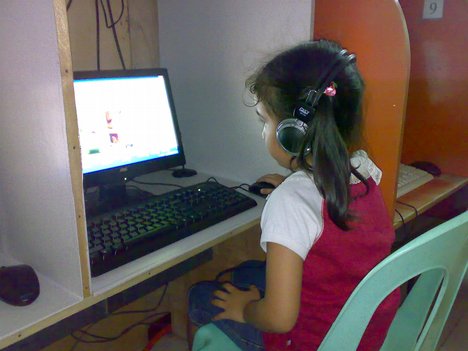
Under a queasy expanse of fluorescent lights were hundreds of tiny cubicles, the clicking due to the frenzied keystrokes of three hundred little sets of fingers typing furiously.

“The Rand prepares children for life in Corporate America,” said Dr. Tyrel, “AND allows us to harness the moneymaking potential of youthful energy and creativity now, while we can still use it -- thus bringing new outsourcing opportunities to corporations in dire need of young blood.”

Having missed Challenge Period, Da-da had arrived during First Period: Day Trading. Timed to begin as the market opened in New York, it was actually a part of every school period in-between bells. As it was, many of the tykes were already multi-millionaires (money held by the school in trust till the kids were old enough to hire an attorney). Second Period was devoted to coding, the little ones furiously trying to finish some bit of database management code for a large local company.


Third Period: Marketing and Public Relations. Some kids worked on their five-hundred-year roadmaps, while others immersed themselves in common-sense development groups, where they touched things that were hot (labeled HOT), and sharp (labeled SHARP). In the PR clinic, kids learned how to suck up to analysts and use jargon in place of creativity, as well as bill one hour for five-minutes of work, later declaring themselves geniuses.

The recess bell rang. The munchkins streamed from their cubes and snagged Starbucks coffee and cookies laced with antacid; coffee, candy and cigarettes were provided free of charge throughout the day in lieu of milk and water. The recess bell rang again three minutes later. Break over.

Next Period saw children in stock portfolio clinics. Fifth Period dealt with Maximizing Shareholder Value and "Creative Truthfulness." Sixth Period was normally concerned with learning to jerk around vendors, but today’s curriculum was postponed for more coding. (Evidently, there was a big push to get the demo done.) Seventh Period was a working lunch, with Indian food brought in while the children slaved.

Eighth Period: more coding while Dr. Tyrel delivered an inspirational speech over the PA system. “Besides being part of history, you lucky children will be the world's first trillionaires. Remember: money is the most important thing… that, and making your deadline.” Ninth Period involved Financing. Huge smiling pictures of “famous” venture capitalists were displayed, as well as tips on how to differentiate a banker from an attorney in a crowded room.

Finally, well past dark, the Last Period was upon us. Similar to the Challenge Period, the kids were required to sit for an hour in small, fast-moving automobile-like structures chained to each other as they flowed around a quarter-mile track, dragged around by a motorized horizontal pole. Each “car” was equipped with a radio and a fake cellphone. Signs along the “road” identified the scene as a scale model of the local 101 freeway corridor. Kids sat and looked miserable in the heat, just like their adult counterparts, and were shown how to eat dinner in their cars while furtively talking on cellphones, texting and working on Powerpoint Presentations. (The morning class taught how to sleep, eat, shower, shave, apply makeup and read email during morning commutes.)

In the end, Dr. Tyrel summed up the experience: “We need schools like this to bring kids’ high expectations down to earth. After all, the pyramids could never have been built in a democracy.”
The Rand's Busy Receptionist


30.5.10

The Once & Future Submerged Dada


Someone finally opened a museum -- underwater -- memorializing my days in Discorporate America. See it here. You can still see me playing Solitaire...
Related Posts Plugin for WordPress, Blogger...